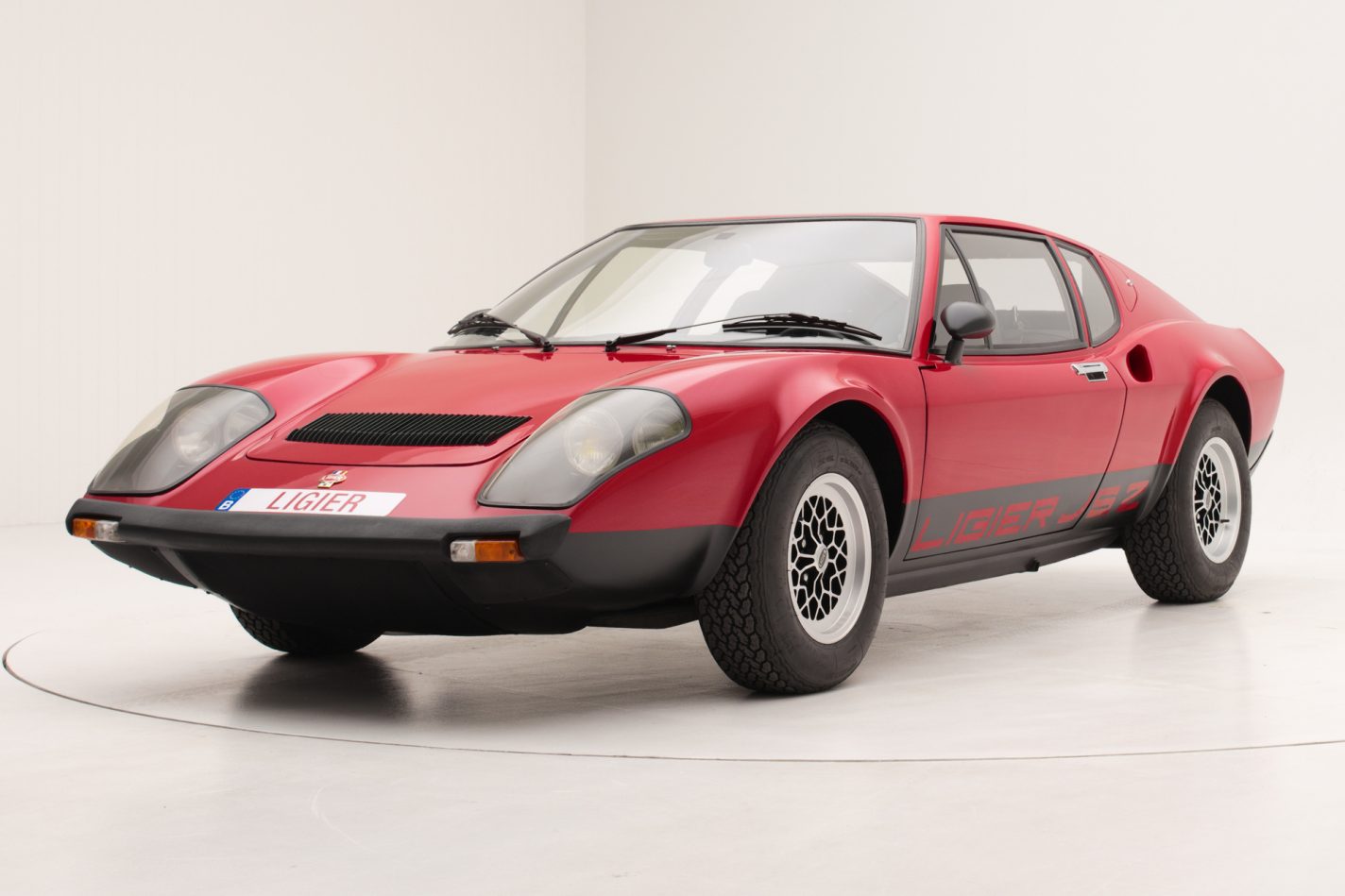
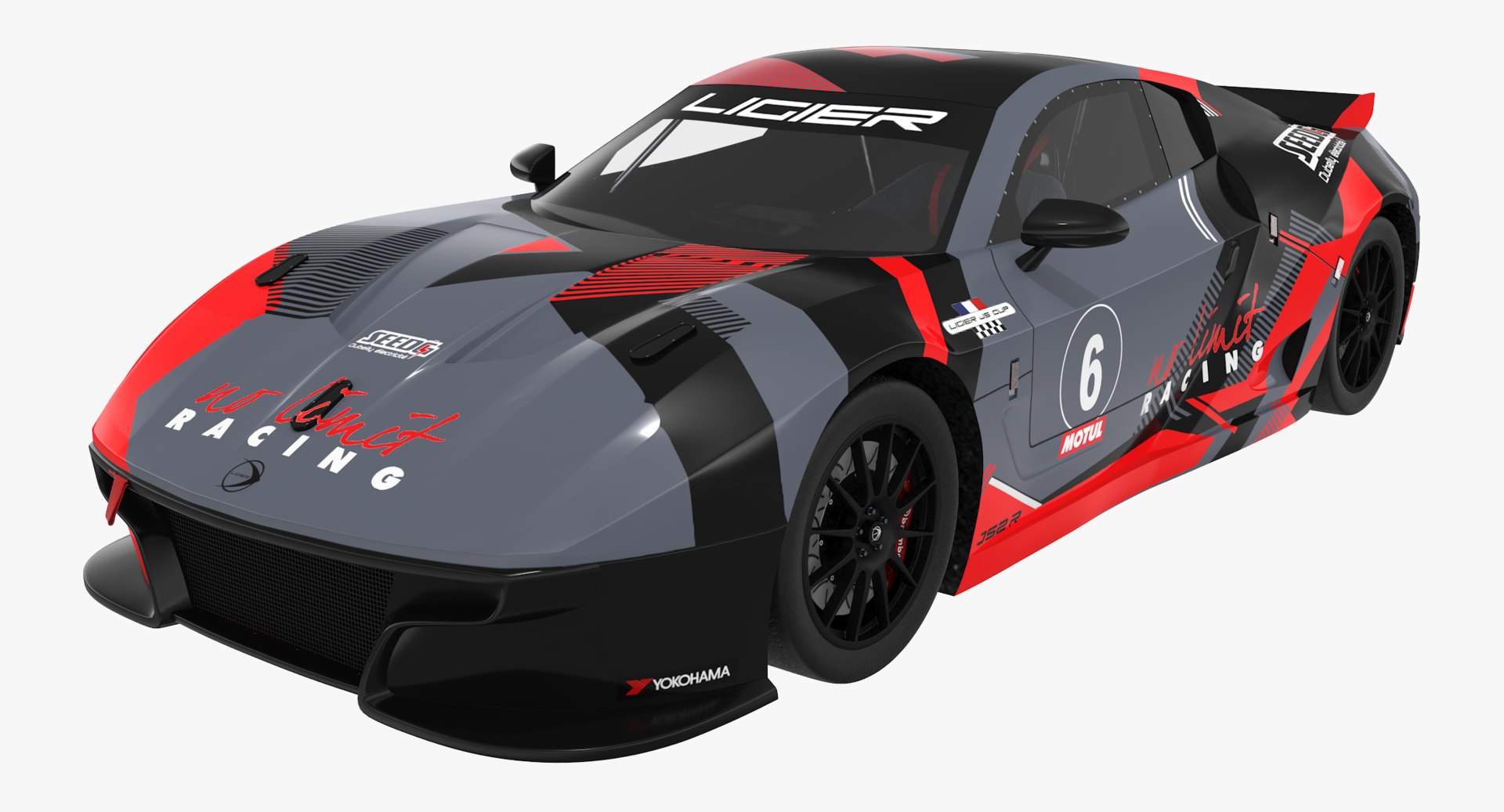
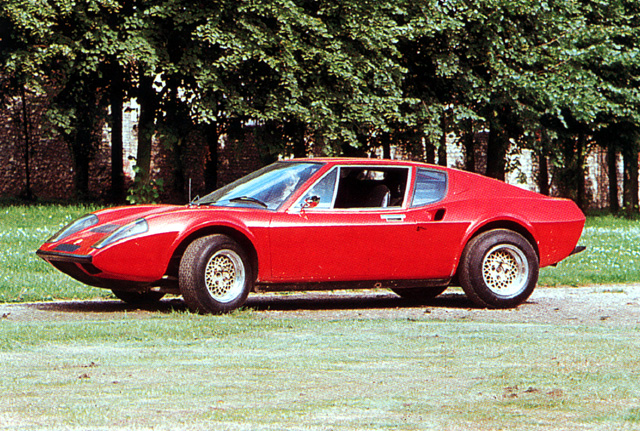
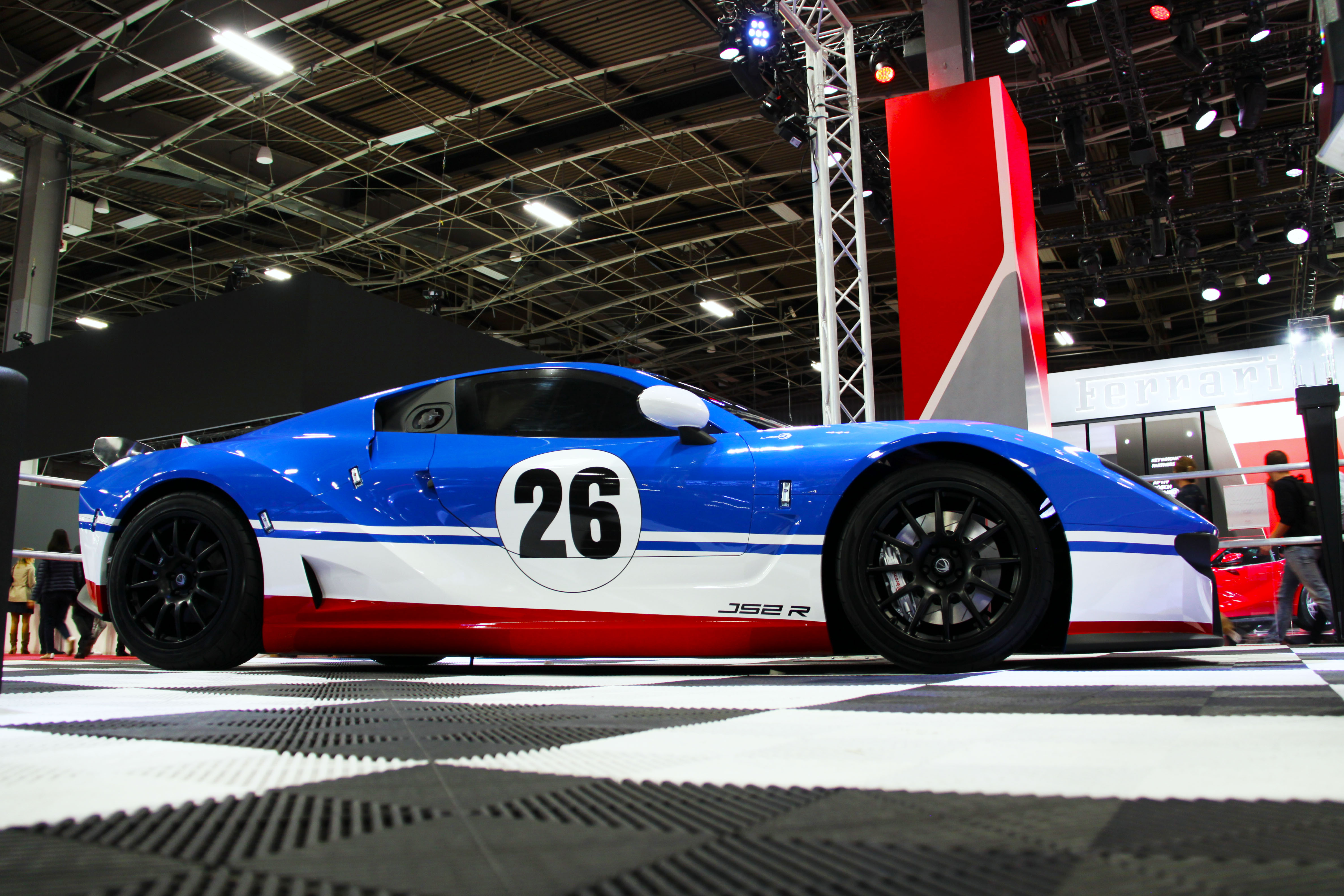
The Ligier JS2 R is a GT racing car manufactured by French automaker Ligier. Designed solely for track use, the car is an homage to the original Ligier JS2 introduced in 1972.
Model information
The JS2 R debuted at the Paris Motor Show in 2018, the Ligier company's 50th anniversary year. It was inspired by the Ligier JS2 introduced in 1972, a car described as having superior driving dynamics and the best power-to-weight ratio of the time. The original JS2 finished second in its class at the 1975 24 Hours of Le Mans. The JS2 R borrows many design cues from the JS2. The "R" in the car's name is said to stand for either "Revival", or "Race". While it is designed to be an easy car to drive, no road-legal variant of the JS2 R is planned.
Features
The car is powered by the same 3.7 L Ford Duratec 37 V6 engine used in the JS P4, coupled to a 6-speed sequential manual transmission with pneumatic shift mechanism and paddle shifters. Early engines generated a maximum power output of 335 PS (246 kW; 330 hp), but in 2020 power rose to 355 PS (261 kW; 350 hp). The braking system is from Brembo, with 6-piston calipers and 343 mm (13.5 in) rotors in front, and 4-piston calipers over 304 mm (12.0 in) rotors in back. The suspension is a double wishbone system with actuated push-rods at the rear, with adjustable anti-roll bars and dampers. The interior is driver focused, and designed to accommodate tall drivers. A heated windscreen is standard equipment.
The JS2 R is designed to deliver low running costs and ease of maintenance. The car can be homologated for FIA Group E category. Test days were scheduled for November 2018 for prospective buyers.
Motorsports
Since 2020 the car competes in its own category in the "Ligier European Series" of racing.
Technical data
Ligier JS2 RH2
The JS2 R provided the basis for development of a demonstration hydrogen powered vehicle to be unveiled at the 24 Hours of Le Mans in early June 2023. The car, called the JS2 RH2, is a joint project of Bosch, who has oversight of the overall vehicle concept including engine, hydrogen storage, and development of a safety concept, and Ligier, who is responsible for vehicle architecture, H2 system integration and cooling.
References
External links